
by Lenka Trdina | Nov 4, 2026 | 2026
Defects play a crucial role in determining the electrical, dielectric, and ionic transport properties of perovskite oxides. But can we deliberately control their formation and behavior? Fermi-level engineering offers a powerful approach to manipulating defect...

by Lenka Trdina | Oct 14, 2026 | 2026
Analog quantum simulators based on ultracold atoms trapped in optical lattices can be used to study condensed-matter systems with single-site resolution. The quest for more control over individual atoms in such systems has culminated in a new generation of experiments...

by Lenka Trdina | Sep 23, 2026 | 2026
Artificial intelligence (AI) is becoming an increasingly important part of scientific work. In the lecture, I will first show how AI models operate and how rapidly they are advancing. I will focus on our own experimental research. In the laboratory, we have built...

by Lenka Trdina | Jun 10, 2026 | 2026
Nucleation and the early growth stages of matter shape processes across enormous length scales, from the condensation of cosmic dust in stellar outflows to the controlled synthesis and degradation of functional nanomaterials. In the lecture, I will highlight how...
by Lenka Trdina | Jun 3, 2026 | 2026
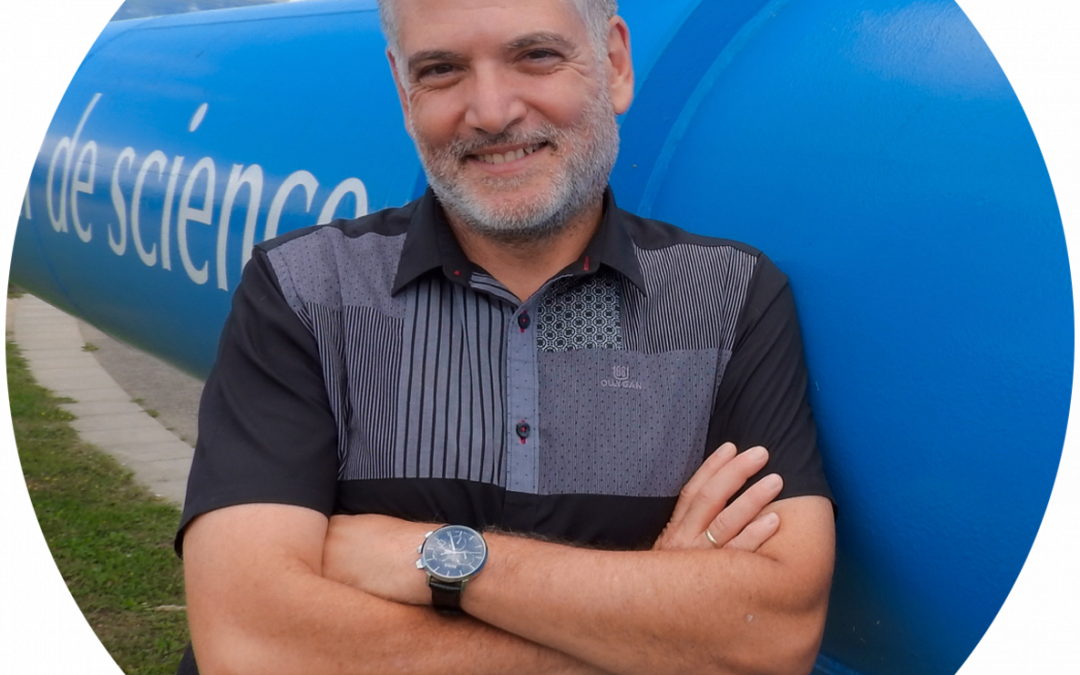
Large-scale international experiments, such as those used in particle physics research, require the sustained support of funding providers and the public, from the early planning stages throughout their decades-long lifetimes. I will report on a variety of outreach...

by Manca Žitnik | May 27, 2026 | 2026
The field of quantum technology has seen remarkable progress over the past two decades. Recent advances have enabled the construction of quantum computers with several hundred qubits and the demonstration of quantum error correction. Nevertheless, the path towards...
