
Announcing
There are currently no colloquia announced.
Last lectures
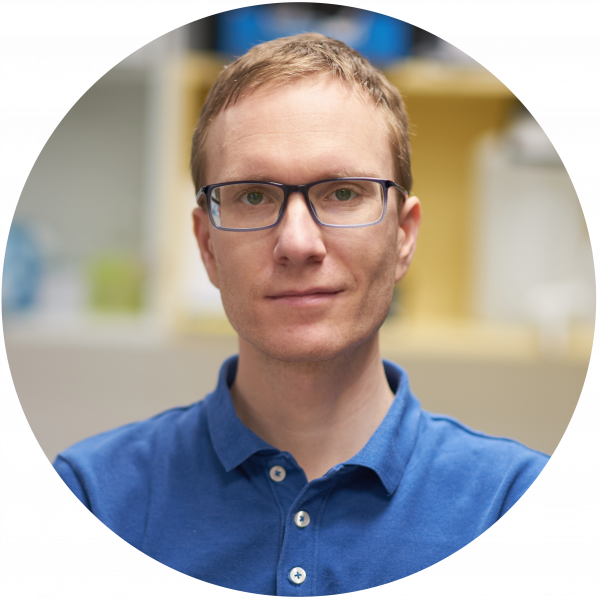
Artificial intelligence: experience from our laboratory and the questions it raises
Assoc. Prof. Dr. Matjaž Humar
Jožef Stefan Institute, Ljubljana, Slovenia
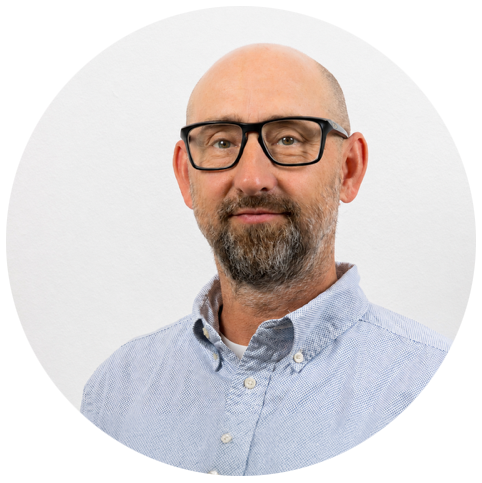
Transmission electron microscopy of nanoparticles nucleation: from cosmic dust to nanoconfined reactions
Prof. dr. Sašo Šturm
Jožef Stefan Institute, Ljubljana, Slovenia
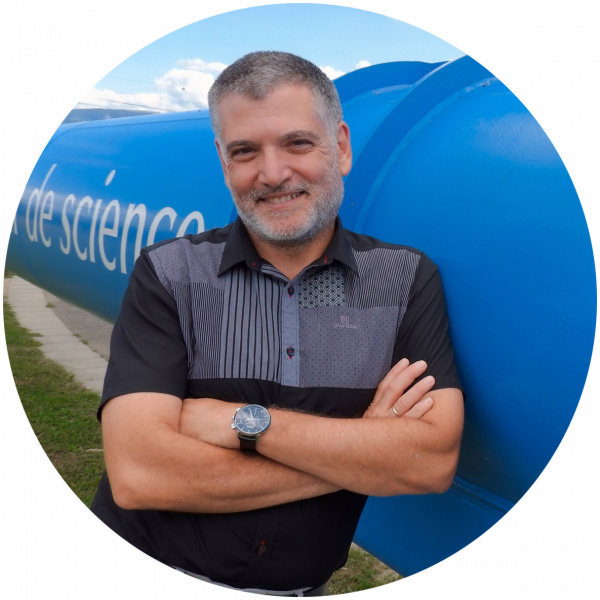
Why we bother: the urgency and necessity of public engagement in science today
Dr. Steven Goldfarb
University of Melbourne, Australia
Archive
2026
Artificial intelligence: experience from our laboratory and the questions it raises
Assoc. Prof. Dr. Matjaž Humar
Jožef Stefan Institute, Ljubljana, Slovenia
Transmission electron microscopy of nanoparticles nucleation: from cosmic dust to nanoconfined reactions
Prof. dr. Sašo Šturm
Jožef Stefan Institute, Ljubljana, Slovenia
Why we bother: the urgency and necessity of public engagement in science today
Dr. Steven Goldfarb
University of Melbourne, Australia
From laboratory to industry: how to build large quantum computers?
Dr. Anton Potočnik
IMEC, Leuven, Belgium
How cells use a newly identified signalling mechanism for defense and programmed cell death
prof. dr. Boštjan Kobe
Univerza v Queenslandu, Brisbane, Avstralija
Towards a quantum internet
Prof. Dr. Stephanie Wehner
Delft University of Technology, QuTech, Delft, The Netherlands
Decoding electrochemical systems: fast impedance spectroscopy, probabilistic diagnostics, and AI-driven analysis
Assoc. Prof. Dr. Pavle Boškoski
Jožef Stefan Institute, Ljubljana, Slovenia
How AI learns to see, generate, and judge fairly
Prof. Dr. Nicu Sebe
University of Trento, Trento, Italy
Metals under the pressure of sustainable development
Prof. Dr. Ingrid Milošev
Jožef Stefan Institute, Ljubljana, Slovenia and Valdoltra Orthopaedic Hospital, Ankaran, Slovenia
Controlling light with light
Prof. Dr. Igor Muševič
Jožef Stefan Institute, Ljubljana, Slovenia
Super-resolution microscopy for dynamic structural cell biology
Prof. Dr. Jonas Ries
University of Vienna, Vienna, Austria
Deep learning in the search for dark matter: an overview
Dr. Roberto Ruiz de Austri
Spanish National Research Council (CSIC) and Institute of Corpuscular Physics (IFIC), Valencia, Spain
From Charcot to zebrafish: decoding ALS one gene at a time
Prof. Dr. Edor Kabashi
Imagine – Institute of Genetic Diseases and Charcot Institute, Paris, France
Pulsed laser deposition at the Jožef Stefan Institute
Assoc. Prof. Dr. Matjaž Spreitzer
Jožef Stefan Institute, Ljubljana, Slovenia
From thick-film structures to smart devices
Assoc. Prof. Dr. Danjela Kuščer
Jožef Stefan Institute, Ljubljana, Slovenia
2025
Methods for semi-automated hypothesis generation from scientific literature: an open science approach
prof. dr. Nada Lavrač Jožef Stefan Institute, Ljubljana, Slovenia,
prof. dr. Bojan Cestnik Jožef Stefan Institute, Ljubljana, Slovenia,
izr. prof. dr. Andrej Kastrin Faculty of Medicine, University of Ljubljana, Ljubljana, Slovenia
New approaches to determining the atomic-level structure of advanced materials
Assoc. Prof. Dr. Dominik J. Kubicki
University of Birmingham, Birmingham, United Kingdom
Design of functional metal-organic frameworks through computational crystal structure prediction
Assoc. Prof. Dr. Mihails Arhangelskis
University of Warsaw, Warsaw, Poland
Polymer plasma treatment: from basics to industrial challenges
Assist. Prof. Dr. Alenka Vesel
Jožef Stefan Institute, Ljubljana, Slovenia
Mucinomics as the next frontier of mass spectrometry
Assist. Prof. Dr. Stacy Malaker
Yale University, USA
Attosecond light pulses for studying electron dynamics
Prof. Dr. Anne L’Huillier
Nobel laureate in physics in 2023
Lund University, Sweden
How to achieve efficient control of systems without sweat?
Assoc. Prof. Dr. Damir Vrančić, Jožef Stefan Institute, Ljubljana, Slovenija
Oriented mineral intergrowths: formation and implications
Assoc. Prof. Dr. Nina Daneu, Jožef Stefan Institute, Ljubljana, Slovenija
The quest for physics beyond the standard model: facts, fancies and opinions
Prof. Dr. Raymond R. Volkas, The University of Melbourne, Australia
How feedback loops between proteins and mRNA maintain cellular homeostasis
Prof. Dr. Jernej Ule, The Francis Crick Institute and King’s College London, London, United Kingdom, and National Institute of Chemistry, Ljubljana, Slovenia
The quantum way of doing computations, simulations and measurements
Prof. Dr. Rainer Blatt, University of Innsbruck, Institute for Quantum Optics and Quantum Information, and Alpine Quantum Technologies (AQT) GmbH, Innsbruck, Austria
Structure/property nexus in perovskite oxides
Prof. Dr. John E. Greedan, McMaster University, Hamilton, Canada
Space skiing for health
Prof. Dr. Igor Mekjavić, European Space Agency (ESA) ground-base research facility in Planica and Jožef Stefan Institute, Ljubljana, Slovenia
What causes amyotrophic lateral sclerosis?
Prof. Dr. Ammar Al-Chalabi, King’s College London, United Kingdom
Quantum noise and self-assembly from the beginning of the universe to quantum computing
Prof. Dr. Dragan Mihailović, Jožef Stefan Institute, Ljubljana, Slovenia
Accessible medical imaging
Assoc. Prof. Dr. Rok Pestotnik, Jožef Stefan Institute, Ljubljana, Slovenia
Dose assessment: from conceptual model to environmental radioactivity monitoring
Assist. Prof. Dr. Benjamin Zorko, Jožef Stefan Institute, Ljubljana, Slovenia
2024
Ferroelectric nematic liquids
Dr. Nerea Sebastián Ugarteche
Jožef Stefan Institute, Ljubljana, Slovenia
Quantum entanglement, foundations and experiments
Prof. Dr. Anton Zeilinger
Nobel laureate in physics in 2022
University of Vienna, Austrian Academy of Sciences, Austria
Augmenting human performance using wearable robotics and machine learning
Prof. Dr. Lorenzo Masia, Technical University of Munich (TUM), Germany
From stem cells to smart brains in the lab
Prof. Dr. Peter Ponsaerts, University of Antwerp, Belgium
Artificial intelligence and scientific discovery: paradigms, progress and potential
Dr. Pat Langley, Institute for the Study of Learning and Expertise, Palo Alto, California, USA
Build a community with LEGO microbes
Assoc. Prof. Dr. Aleš Lapanje, Jožef Stefan Institute, Ljubljana
Spectroscopy of quantum spin liquids
Assoc. Prof. Dr. Andrej Zorko, Jožef Stefan Institute and Faculty of Mathematics and Physics, University of Ljubljana, Slovenia
Physics at CERN: onward from the first 70 years
Prof. Dr. Jonathan R. Ellis, King’s College London, United Kingdom
From lab oddities to technical applications: the chemistry of halogens and their compounds
Prof. Dr. Sebastian Riedel, Free University of Berlin, Berlin, Germany
Advancing many-body quantum physics with dipolar quantum gases
Prof. Dr. Francesca Ferlaino, Institute for Experimental Physics, University of Innsbruck, Institute for Quantum Optics and Quantum Information, Austrian Academy of Science, Austria
Ultrafast dynamics of electronically ordered states excited by femtosecond optical pulses
Assist. Prof. Dr. Tomaž Mertelj, Jožef Stefan Institute, Ljubljana, Slovenia
New materials from high pressure
Prof. Dr. J. Paul Attfield, Centre for Science at Extreme Conditions and University of Edinburgh, United Kingdom
Animal toxins – curse and blessing
Prof. Dr. Igor Križaj, Jožef Stefan Institute, Ljubljana, Slovenia
Autophagic mechanisms in ageing and neurodegeneration
Prof. Dr. Nektarios Tavernarakis, Institute of Molecular Biology and Biotechnology, Foundation for Research and Technology – Hellas and University of Crete, Heraklion, Greece
Presentation of scientific achievements in the field of experimental physics and astrophysics of elementary particles
Prof. Dr. Danilo Zavrtanik, University of Nova Gorica and Jožef Stefan Institute, Slovenia
Defects, multi-properties coupling and giant electro-mechanical response in complex materials
Prof. Dr. Dragan Damjanovic, Institute of Materials, Ecole polytechnique fédérale de Lausanne (EPFL), Lausanne, Switzerland
World of structural defects in perovskite ferroelectrics
Prof. Dr. Andreja Benčan Golob, Jožef Stefan Institute, Ljubljana, Slovenia
2023
Physics at the edge of chaos
Assoc. Prof. Dr. Lev Vidmar, Jožef Stefan Institute and Faculty of Mathematics and Physics, University of Ljubljana, Slovenia
On the way from B meson anomalies to new physics
Prof. Dr. Svjetlana Fajfer, Jožef Stefan Institute and Faculty of Mathematics and Physics, University of Ljubljana, Slovenia
Development of photothermal radiometry techniques for use in biomedicine
Prof. Dr. Boris Majaron, Jožef Stefan Institute, Ljubljana, Slovenia and Faculty of Mathematics and Physics, University of Ljubljana, Slovenia
Harnessing fusion energy and recent successful experiments
Assoc. Prof. Dr. Igor Lengar, Jožef Stefan Institute, Ljubljana, Slovenia
Take it to the limit: a story of piezoelectric materials and devices for extreme conditions
Prof. Dr. Andrew J. Bell, The University of Leeds, United Kingdom
Solid state detectors for future colliders
Assist. Prof. Dr. Igor Mandić, Jožef Stefan institute, Ljubljana, Slovenia
Dreams about dreams: topology with spatiotemporally sculptured light
Prof. Dr. Qiwen Zhan, University of Shanghai for Science and Technology, China
What’s wrong with large language models and what we should be building instead
Prof. Dr. Thomas G. Dietterich, Oregon State University, USA
Gas sensors based on transition metal dichalgogenides
Prof. Dr. Eduard Llobet Valero, University of Tarragona, Tarragona, Spain
What can we learn from noisy quantum computers right now?
Prof. Dr. Lev Ioffe, Google Quantum AI, Google Research, USA
Quantum sensors with matter waves
Dr. Philippe Bouyer, Quantum Delta NL, University of Amsterdam, Eindhoven University of Technology, Netherlands
Hard protective coatings: between science and industry
Assoc. Prof. Dr. Miha Čekada, Jožef Stefan institute, Ljubljana, Slovenia
Machine learning from relational and textual data
Prof. Dr. Nada Lavrač, Jožef Stefan Institute, Ljubljana, Slovenia and Prof. Dr. Marko Robnik-Šikonja, Faculty of Computer Science and Informatics, University of Ljubljana, Slovenia
Pollutants of concern: the journey from sources to the environment
Prof. Dr. Ester Heath, Jožef Stefan Institute, Ljubljana, Slovenia
Crystallography in the 21st century: the age of electron?
Dr. Lukáš Palatinus, Institute of Physics of the Czech Academy of Sciences, Czech Republic
Quantum spin liquids and their experimental realizations
Prof. Dr. Frédéric Mila, Ecole Polytechnique Fédérale de Lausanne (EPFL), Switzerland
Coherent test of lepton universality in beauty to strange quark transitions
Dr. Vladimir Vava Gligorov, Sorbonne Université, CNRS, France
Magnetic resonance microscopy
Prof. Dr. Igor Serša, Jožef Stefan Institute, Ljubljana, Slovenia
2022
Superdifusion in a Heisenberg magnetic chain
7. 12. 2022
Dr. Enej Ilievski, Faculty of Mathematics and Physics, University of Ljubljana
Quantum black holes: an encounter between Hawking and Ramanujan
1. 12. 2022
Prof. Dr. Atish Dabholkar, International Centre for Theoretical Physics (ICTP), Trieste, Italy
In the depths of the atom
23. 11.2022
Prof. Dr. Alojz Kodre, Faculty of Mathematics and Physics, University of Ljubljana
Domain-wall dynamics in ferroelectric and relaxor-based ceramics
16. 11. 2022
Prof. Dr. Tadej Rojac, Jožef Stefan Institute
Usual and unusual states made of quarks
10. 11. 2022
Prof. Dr. Saša Prelovšek Komelj, Jožef Stefan Institute and Faculty of Mathematics and Physics, University of Ljubljana
Processing matters: materials challenges for the second quarter of the 21st century
26. 10. 2022
Prof. Dr. Geoff Brennecka, Colorado School of Mines, USA
Geo-inspired ceramic carriers: from design to medical applications
21. 9. 2022
Dr. Bogdan Parakhonskiy, Ghent University, Belgium
Innovations in radiation medicine
7. 9. 2022
Prof. Dr. Thomas Rockwell Mackie, University of Wisconsin, USA
Additive Manufacturing and Liquid Crystal Technologies
15. 6. 2022
Prof. Dr. Stephen M. Morris, University of Oxford, United Kingdom
Modelling chemical pollution to support a safe and sustainable chemicals management
5. 5. 2022
Prof. Dr. Peter Fantke, Technical University of Denmark, Denmark
Humanoid Robotics – Understanding Human Performance and Intelligence
24. 3. 2022
Prof. Dr. Tamim Asfour, Karlsruhe Institute of Technology (KIT), Germany
Challenges of the internet of the future: security, connectivity and humanity aspects
23. 3. 2022
Prof. Dr. Borka Jerman Blažić, Jožef Stefan Institute
What does a black and white picture of atoms tell us?
22. 3. 2022
Prof. Dr. Goran Dražić, National Institute of Chemistry and Jožef Stefan Institute
Haze Instruments d.o.o., Measurement of aerosol absorption with a photothermal interferometer
21. 3. 2022
Prof. Dr. Luka Drinovec, University of Nova Gorica and Jožef Stefan Institute
Haze Instruments d.o.o., Light absorption in aerosols affects climate – how do we measure it?
21. 3. 2022
Prof. Dr. Griša Močnik, University of Nova Gorica and Jožef Stefan Institute
FAIR – the universe in the lab
16. 3. 2022
Prof. Dr. Paolo Giubellino in Joerg Blaurock, GSI and FAIR, Darmstadt, Germany
From quantum impurities to quantum devices
12. 1. 2022
Assoc. Prof. Dr. Rok Žitko, Jožef Stefan Institute and Faculty of Mathematics and Physics, University of Ljubljana
2021
Cavitation – the path from its prevention to its use for destroying viruses and bacteria
15. 12. 2021
Prof. Dr. Matevž Dular, Faculty of Mechanical Engineering, University of Ljubljana
Multiscale simulations of open molecular systems
24. 11. 2021
Prof. Dr. Matej Praprotnik, National Institute of Chemistry and Faculty of Mathematics and Physics, University of Ljubljana
Why the Nobel Prize for the discovery of the Piezo1 and Piezo2 proteins was awarded
27. 10. 2021
Prof. Dr. Saša Svetina, Institute of biophysics, Faculty of Medicine, University of Ljubljana and Jožef Stefan Institute
Modeling of the COVID-19 epidemic in Slovenia
12. 05. 2021
Dr. Matjaž Leskovar, Jožef Stefan Institute
New research opportunities with free electron lasers
21. 04. 2021
Prof. Dr. Claudio Masciovecchio, Elettra Sincrotrone Trieste, Italy
X-ray diffraction screening of major protease crystals reveals SARS-CoV-2 inhibitors
16. 04. 2021
Prof. Dr. Dušan Turk, Jožef Stefan Institute
Optimization of measures to contain the COVID-19 epidemic
14. 04. 2021
Prof. Dr. Mitja Luštrek, Jožef Stefan Institute
Fullerenes: superconductivity, magnetism and qubits
26. 03. 2021
Prof. Dr. Denis Arčon, Jožef Stefan Institute and Faculty of Mathematics and Physics, University of Ljubljana
Measurements of cosmic particles of extreme energies at the Pierre Auger Observatory
25. 03. 2021
Prof. Dr. Andrej Filipčič and Prof. Dr. Marko Zavrtanik, Jožef Stefan Institute and University of Nova Gorica
Challenges of the development of electronics as a companion of modern research and applications
25. 03. 2021
Dr. Janko Petrovčič, Jožef Stefan Institute
Quantum computing with atoms trapped by light
23. 03. 2021
Prof. Dr. David S. Weiss, Pennsylvania State University, University Park, USA
Ferroelectric ceramics: an overview of the century of research from discovery of the ferroelectric effect to the present day
23. 03. 2021
Prof. Dr. Barbara Malič, Jožef Stefan Institute and Jožef Stefan International Postgraduate School
Stable isotopes in interdisciplinary research
22. 03. 2021
Prof. Dr. Nives Ogrinc, Jožef Stefan Institute and Jožef Stefan International Postgraduate School
Archive
2026
Artificial intelligence: experience from our laboratory and the questions it raises
Assoc. Prof. Dr. Matjaž Humar
Jožef Stefan Institute, Ljubljana, Slovenia
Transmission electron microscopy of nanoparticles nucleation: from cosmic dust to nanoconfined reactions
Prof. dr. Sašo Šturm
Jožef Stefan Institute, Ljubljana, Slovenia
Why we bother: the urgency and necessity of public engagement in science today
Dr. Steven Goldfarb
University of Melbourne, Australia
From laboratory to industry: how to build large quantum computers?
Dr. Anton Potočnik
IMEC, Leuven, Belgium
How cells use a newly identified signalling mechanism for defense and programmed cell death
prof. dr. Boštjan Kobe
Univerza v Queenslandu, Brisbane, Avstralija
Towards a quantum internet
Prof. Dr. Stephanie Wehner
Delft University of Technology, QuTech, Delft, The Netherlands
Decoding electrochemical systems: fast impedance spectroscopy, probabilistic diagnostics, and AI-driven analysis
Assoc. Prof. Dr. Pavle Boškoski
Jožef Stefan Institute, Ljubljana, Slovenia
How AI learns to see, generate, and judge fairly
Prof. Dr. Nicu Sebe
University of Trento, Trento, Italy
Metals under the pressure of sustainable development
Prof. Dr. Ingrid Milošev
Jožef Stefan Institute, Ljubljana, Slovenia and Valdoltra Orthopaedic Hospital, Ankaran, Slovenia
Controlling light with light
Prof. Dr. Igor Muševič
Jožef Stefan Institute, Ljubljana, Slovenia
Super-resolution microscopy for dynamic structural cell biology
Prof. Dr. Jonas Ries
University of Vienna, Vienna, Austria
Deep learning in the search for dark matter: an overview
Dr. Roberto Ruiz de Austri
Spanish National Research Council (CSIC) and Institute of Corpuscular Physics (IFIC), Valencia, Spain
From Charcot to zebrafish: decoding ALS one gene at a time
Prof. Dr. Edor Kabashi
Imagine – Institute of Genetic Diseases and Charcot Institute, Paris, France
Pulsed laser deposition at the Jožef Stefan Institute
Assoc. Prof. Dr. Matjaž Spreitzer
Jožef Stefan Institute, Ljubljana, Slovenia
From thick-film structures to smart devices
Assoc. Prof. Dr. Danjela Kuščer
Jožef Stefan Institute, Ljubljana, Slovenia
2025
Methods for semi-automated hypothesis generation from scientific literature: an open science approach
prof. dr. Nada Lavrač Jožef Stefan Institute, Ljubljana, Slovenia,
prof. dr. Bojan Cestnik Jožef Stefan Institute, Ljubljana, Slovenia,
izr. prof. dr. Andrej Kastrin Faculty of Medicine, University of Ljubljana, Ljubljana, Slovenia
New approaches to determining the atomic-level structure of advanced materials
Assoc. Prof. Dr. Dominik J. Kubicki
University of Birmingham, Birmingham, United Kingdom
Design of functional metal-organic frameworks through computational crystal structure prediction
Assoc. Prof. Dr. Mihails Arhangelskis
University of Warsaw, Warsaw, Poland
Polymer plasma treatment: from basics to industrial challenges
Assist. Prof. Dr. Alenka Vesel
Jožef Stefan Institute, Ljubljana, Slovenia
Mucinomics as the next frontier of mass spectrometry
Assist. Prof. Dr. Stacy Malaker
Yale University, USA
Attosecond light pulses for studying electron dynamics
Prof. Dr. Anne L’Huillier
Nobel laureate in physics in 2023
Lund University, Sweden
How to achieve efficient control of systems without sweat?
Assoc. Prof. Dr. Damir Vrančić, Jožef Stefan Institute, Ljubljana, Slovenija
Oriented mineral intergrowths: formation and implications
Assoc. Prof. Dr. Nina Daneu, Jožef Stefan Institute, Ljubljana, Slovenija
The quest for physics beyond the standard model: facts, fancies and opinions
Prof. Dr. Raymond R. Volkas, The University of Melbourne, Australia
How feedback loops between proteins and mRNA maintain cellular homeostasis
Prof. Dr. Jernej Ule, The Francis Crick Institute and King’s College London, London, United Kingdom, and National Institute of Chemistry, Ljubljana, Slovenia
The quantum way of doing computations, simulations and measurements
Prof. Dr. Rainer Blatt, University of Innsbruck, Institute for Quantum Optics and Quantum Information, and Alpine Quantum Technologies (AQT) GmbH, Innsbruck, Austria
Structure/property nexus in perovskite oxides
Prof. Dr. John E. Greedan, McMaster University, Hamilton, Canada
Space skiing for health
Prof. Dr. Igor Mekjavić, European Space Agency (ESA) ground-base research facility in Planica and Jožef Stefan Institute, Ljubljana, Slovenia
What causes amyotrophic lateral sclerosis?
Prof. Dr. Ammar Al-Chalabi, King’s College London, United Kingdom
Quantum noise and self-assembly from the beginning of the universe to quantum computing
Prof. Dr. Dragan Mihailović, Jožef Stefan Institute, Ljubljana, Slovenia
Accessible medical imaging
Assoc. Prof. Dr. Rok Pestotnik, Jožef Stefan Institute, Ljubljana, Slovenia
Dose assessment: from conceptual model to environmental radioactivity monitoring
Assist. Prof. Dr. Benjamin Zorko, Jožef Stefan Institute, Ljubljana, Slovenia
2024
Ferroelectric nematic liquids
Dr. Nerea Sebastián Ugarteche
Jožef Stefan Institute, Ljubljana, Slovenia
Quantum entanglement, foundations and experiments
Prof. Dr. Anton Zeilinger
Nobel laureate in physics in 2022
University of Vienna, Austrian Academy of Sciences, Austria
Augmenting human performance using wearable robotics and machine learning
Prof. Dr. Lorenzo Masia, Technical University of Munich (TUM), Germany
From stem cells to smart brains in the lab
Prof. Dr. Peter Ponsaerts, University of Antwerp, Belgium
Artificial intelligence and scientific discovery: paradigms, progress and potential
Dr. Pat Langley, Institute for the Study of Learning and Expertise, Palo Alto, California, USA
Build a community with LEGO microbes
Assoc. Prof. Dr. Aleš Lapanje, Jožef Stefan Institute, Ljubljana
Spectroscopy of quantum spin liquids
Assoc. Prof. Dr. Andrej Zorko, Jožef Stefan Institute and Faculty of Mathematics and Physics, University of Ljubljana, Slovenia
Physics at CERN: onward from the first 70 years
Prof. Dr. Jonathan R. Ellis, King’s College London, United Kingdom
From lab oddities to technical applications: the chemistry of halogens and their compounds
Prof. Dr. Sebastian Riedel, Free University of Berlin, Berlin, Germany
Advancing many-body quantum physics with dipolar quantum gases
Prof. Dr. Francesca Ferlaino, Institute for Experimental Physics, University of Innsbruck, Institute for Quantum Optics and Quantum Information, Austrian Academy of Science, Austria
Ultrafast dynamics of electronically ordered states excited by femtosecond optical pulses
Assist. Prof. Dr. Tomaž Mertelj, Jožef Stefan Institute, Ljubljana, Slovenia
New materials from high pressure
Prof. Dr. J. Paul Attfield, Centre for Science at Extreme Conditions and University of Edinburgh, United Kingdom
Animal toxins – curse and blessing
Prof. Dr. Igor Križaj, Jožef Stefan Institute, Ljubljana, Slovenia
Autophagic mechanisms in ageing and neurodegeneration
Prof. Dr. Nektarios Tavernarakis, Institute of Molecular Biology and Biotechnology, Foundation for Research and Technology – Hellas and University of Crete, Heraklion, Greece
Presentation of scientific achievements in the field of experimental physics and astrophysics of elementary particles
Prof. Dr. Danilo Zavrtanik, University of Nova Gorica and Jožef Stefan Institute, Slovenia
Defects, multi-properties coupling and giant electro-mechanical response in complex materials
Prof. Dr. Dragan Damjanovic, Institute of Materials, Ecole polytechnique fédérale de Lausanne (EPFL), Lausanne, Switzerland
World of structural defects in perovskite ferroelectrics
Prof. Dr. Andreja Benčan Golob, Jožef Stefan Institute, Ljubljana, Slovenia
2023
Physics at the edge of chaos
Assoc. Prof. Dr. Lev Vidmar, Jožef Stefan Institute and Faculty of Mathematics and Physics, University of Ljubljana, Slovenia
On the way from B meson anomalies to new physics
Prof. Dr. Svjetlana Fajfer, Jožef Stefan Institute and Faculty of Mathematics and Physics, University of Ljubljana, Slovenia
Development of photothermal radiometry techniques for use in biomedicine
Prof. Dr. Boris Majaron, Jožef Stefan Institute, Ljubljana, Slovenia and Faculty of Mathematics and Physics, University of Ljubljana, Slovenia
Harnessing fusion energy and recent successful experiments
Assoc. Prof. Dr. Igor Lengar, Jožef Stefan Institute, Ljubljana, Slovenia
Take it to the limit: a story of piezoelectric materials and devices for extreme conditions
Prof. Dr. Andrew J. Bell, The University of Leeds, United Kingdom
Solid state detectors for future colliders
Assist. Prof. Dr. Igor Mandić, Jožef Stefan institute, Ljubljana, Slovenia
Dreams about dreams: topology with spatiotemporally sculptured light
Prof. Dr. Qiwen Zhan, University of Shanghai for Science and Technology, China
What’s wrong with large language models and what we should be building instead
Prof. Dr. Thomas G. Dietterich, Oregon State University, USA
Gas sensors based on transition metal dichalgogenides
Prof. Dr. Eduard Llobet Valero, University of Tarragona, Tarragona, Spain
What can we learn from noisy quantum computers right now?
Prof. Dr. Lev Ioffe, Google Quantum AI, Google Research, USA
Quantum sensors with matter waves
Dr. Philippe Bouyer, Quantum Delta NL, University of Amsterdam, Eindhoven University of Technology, Netherlands
Hard protective coatings: between science and industry
Assoc. Prof. Dr. Miha Čekada, Jožef Stefan institute, Ljubljana, Slovenia
Machine learning from relational and textual data
Prof. Dr. Nada Lavrač, Jožef Stefan Institute, Ljubljana, Slovenia and Prof. Dr. Marko Robnik-Šikonja, Faculty of Computer Science and Informatics, University of Ljubljana, Slovenia
Pollutants of concern: the journey from sources to the environment
Prof. Dr. Ester Heath, Jožef Stefan Institute, Ljubljana, Slovenia
Crystallography in the 21st century: the age of electron?
Dr. Lukáš Palatinus, Institute of Physics of the Czech Academy of Sciences, Czech Republic
Quantum spin liquids and their experimental realizations
Prof. Dr. Frédéric Mila, Ecole Polytechnique Fédérale de Lausanne (EPFL), Switzerland
Coherent test of lepton universality in beauty to strange quark transitions
Dr. Vladimir Vava Gligorov, Sorbonne Université, CNRS, France
Magnetic resonance microscopy
Prof. Dr. Igor Serša, Jožef Stefan Institute, Ljubljana, Slovenia
2022
Superdifusion in a Heisenberg magnetic chain
7. 12. 2022
Dr. Enej Ilievski, Faculty of Mathematics and Physics, University of Ljubljana
Quantum black holes: an encounter between Hawking and Ramanujan
1. 12. 2022
Prof. Dr. Atish Dabholkar, International Centre for Theoretical Physics (ICTP), Trieste, Italy
In the depths of the atom
23. 11.2022
Prof. Dr. Alojz Kodre, Faculty of Mathematics and Physics, University of Ljubljana
Domain-wall dynamics in ferroelectric and relaxor-based ceramics
16. 11. 2022
Prof. Dr. Tadej Rojac, Jožef Stefan Institute
Usual and unusual states made of quarks
10. 11. 2022
Prof. Dr. Saša Prelovšek Komelj, Jožef Stefan Institute and Faculty of Mathematics and Physics, University of Ljubljana
Processing matters: materials challenges for the second quarter of the 21st century
26. 10. 2022
Prof. Dr. Geoff Brennecka, Colorado School of Mines, USA
Geo-inspired ceramic carriers: from design to medical applications
21. 9. 2022
Dr. Bogdan Parakhonskiy, Ghent University, Belgium
Innovations in radiation medicine
7. 9. 2022
Prof. Dr. Thomas Rockwell Mackie, University of Wisconsin, USA
Additive Manufacturing and Liquid Crystal Technologies
15. 6. 2022
Prof. Dr. Stephen M. Morris, University of Oxford, United Kingdom
Modelling chemical pollution to support a safe and sustainable chemicals management
5. 5. 2022
Prof. Dr. Peter Fantke, Technical University of Denmark, Denmark
Humanoid Robotics – Understanding Human Performance and Intelligence
24. 3. 2022
Prof. Dr. Tamim Asfour, Karlsruhe Institute of Technology (KIT), Germany
Challenges of the internet of the future: security, connectivity and humanity aspects
23. 3. 2022
Prof. Dr. Borka Jerman Blažić, Jožef Stefan Institute
What does a black and white picture of atoms tell us?
22. 3. 2022
Prof. Dr. Goran Dražić, National Institute of Chemistry and Jožef Stefan Institute
Haze Instruments d.o.o., Measurement of aerosol absorption with a photothermal interferometer
21. 3. 2022
Prof. Dr. Luka Drinovec, University of Nova Gorica and Jožef Stefan Institute
Haze Instruments d.o.o., Light absorption in aerosols affects climate – how do we measure it?
21. 3. 2022
Prof. Dr. Griša Močnik, University of Nova Gorica and Jožef Stefan Institute
FAIR – the universe in the lab
16. 3. 2022
Prof. Dr. Paolo Giubellino in Joerg Blaurock, GSI and FAIR, Darmstadt, Germany
From quantum impurities to quantum devices
12. 1. 2022
Assoc. Prof. Dr. Rok Žitko, Jožef Stefan Institute and Faculty of Mathematics and Physics, University of Ljubljana
2021
Cavitation – the path from its prevention to its use for destroying viruses and bacteria
15. 12. 2021
Prof. Dr. Matevž Dular, Faculty of Mechanical Engineering, University of Ljubljana
Multiscale simulations of open molecular systems
24. 11. 2021
Prof. Dr. Matej Praprotnik, National Institute of Chemistry and Faculty of Mathematics and Physics, University of Ljubljana
Why the Nobel Prize for the discovery of the Piezo1 and Piezo2 proteins was awarded
27. 10. 2021
Prof. Dr. Saša Svetina, Institute of biophysics, Faculty of Medicine, University of Ljubljana and Jožef Stefan Institute
Modeling of the COVID-19 epidemic in Slovenia
12. 05. 2021
Dr. Matjaž Leskovar, Jožef Stefan Institute
New research opportunities with free electron lasers
21. 04. 2021
Prof. Dr. Claudio Masciovecchio, Elettra Sincrotrone Trieste, Italy
X-ray diffraction screening of major protease crystals reveals SARS-CoV-2 inhibitors
16. 04. 2021
Prof. Dr. Dušan Turk, Jožef Stefan Institute
Optimization of measures to contain the COVID-19 epidemic
14. 04. 2021
Prof. Dr. Mitja Luštrek, Jožef Stefan Institute
Fullerenes: superconductivity, magnetism and qubits
26. 03. 2021
Prof. Dr. Denis Arčon, Jožef Stefan Institute and Faculty of Mathematics and Physics, University of Ljubljana
Measurements of cosmic particles of extreme energies at the Pierre Auger Observatory
25. 03. 2021
Prof. Dr. Andrej Filipčič and Prof. Dr. Marko Zavrtanik, Jožef Stefan Institute and University of Nova Gorica
Challenges of the development of electronics as a companion of modern research and applications
25. 03. 2021
Dr. Janko Petrovčič, Jožef Stefan Institute
Quantum computing with atoms trapped by light
23. 03. 2021
Prof. Dr. David S. Weiss, Pennsylvania State University, University Park, USA
Ferroelectric ceramics: an overview of the century of research from discovery of the ferroelectric effect to the present day
23. 03. 2021
Prof. Dr. Barbara Malič, Jožef Stefan Institute and Jožef Stefan International Postgraduate School
Stable isotopes in interdisciplinary research
22. 03. 2021
Prof. Dr. Nives Ogrinc, Jožef Stefan Institute and Jožef Stefan International Postgraduate School